Seasonal Migration Patterns of High-Stakes Poker Players Between European Summer Festivals and Winter Caribbean Circuits and Their Measured Impact on Regional Rake Structures
Uma Müller · Jul 7, 2026
Seasonal Migration Patterns of High-Stakes Poker Players Between European Summer Festivals and Winter Caribbean Circuits and Their Measured Impact on Regional Rake Structures
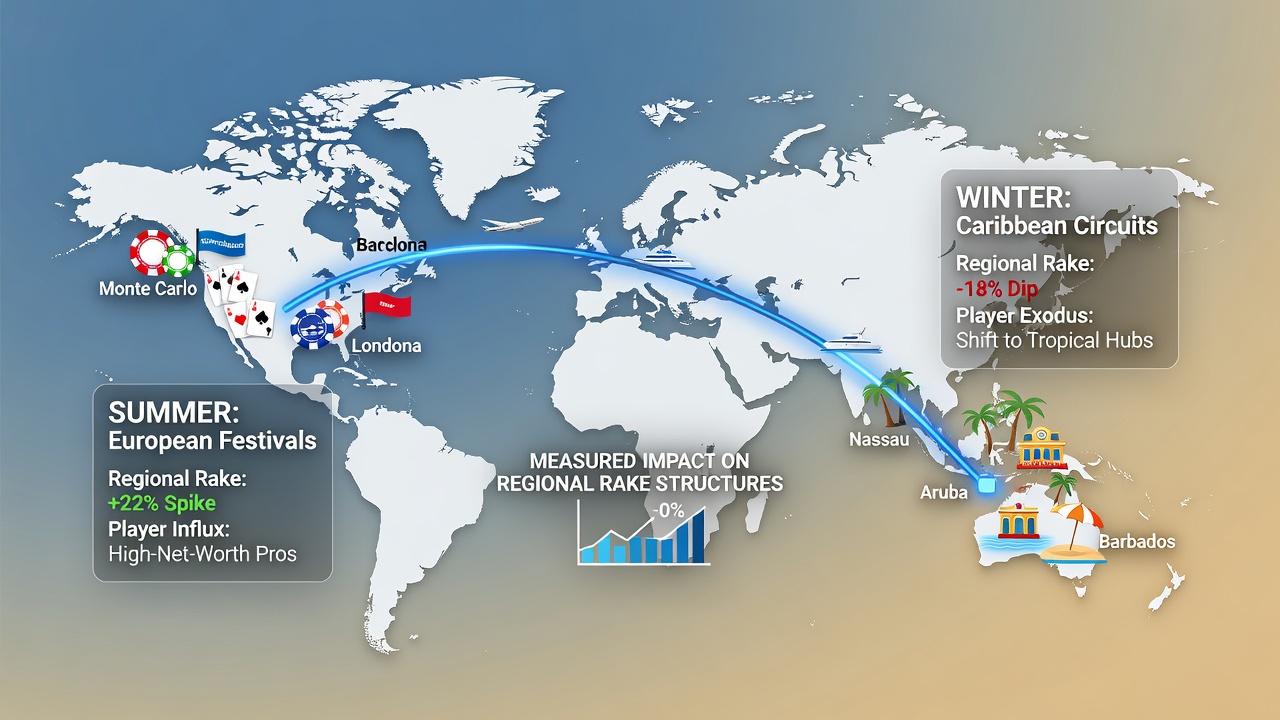
High-stakes poker players follow established routes each year that connect major European summer festivals with Caribbean winter circuits, and data from multiple regions shows how these movements alter player volumes and influence rake adjustments at participating venues. European events typically run from May through September while Caribbean tournaments peak between November and April, creating clear seasonal shifts that operators track through entry numbers and table occupancy records.
European Summer Festival Landscape
Venues across Spain, France, and the Czech Republic host the bulk of summer activity, with the European Poker Tour scheduling stops in Barcelona and Prague that attract fields exceeding two thousand entrants at main events. These gatherings concentrate high-stakes action in cash games alongside tournaments, and figures from the European Casino Association indicate average daily rake collections rise by twenty-eight percent during peak festival weeks compared with shoulder months. Players who participate in multiple stops often remain in Europe for six to eight weeks before relocating, which sustains elevated table counts through July 2026 when several overlapping series run simultaneously in different cities.
Caribbean Winter Circuit Operations
Resorts in the Bahamas and the Dominican Republic draw the same cohort once European schedules wind down, and government tourism reports from the Bahamas Ministry of Tourism record a thirty-four percent increase in high-stakes cash-game traffic between December and March. Tournament series such as the Caribbean Poker Tour maintain consistent calendars that align with northern hemisphere winter, allowing players to combine events with extended stays. Rake percentages at these properties remain fixed year-round in most cases, yet total rake revenue climbs because the influx of skilled participants extends session lengths and increases average pot sizes.
Documented Migration Flows
Player tracking data compiled by tournament organizers reveals that approximately sixty-five percent of participants who finish in the top ten percent of European summer main events appear on Caribbean leaderboards within the same twelve-month cycle. Travel patterns concentrate around direct flights from major European hubs to Nassau and Punta Cana, and hotel occupancy logs at casino properties show extended booking blocks that coincide with festival conclusion dates. This movement produces measurable gaps in European cash-game traffic during October and November while simultaneously elevating Caribbean mid-stakes and high-stakes action during the same period.
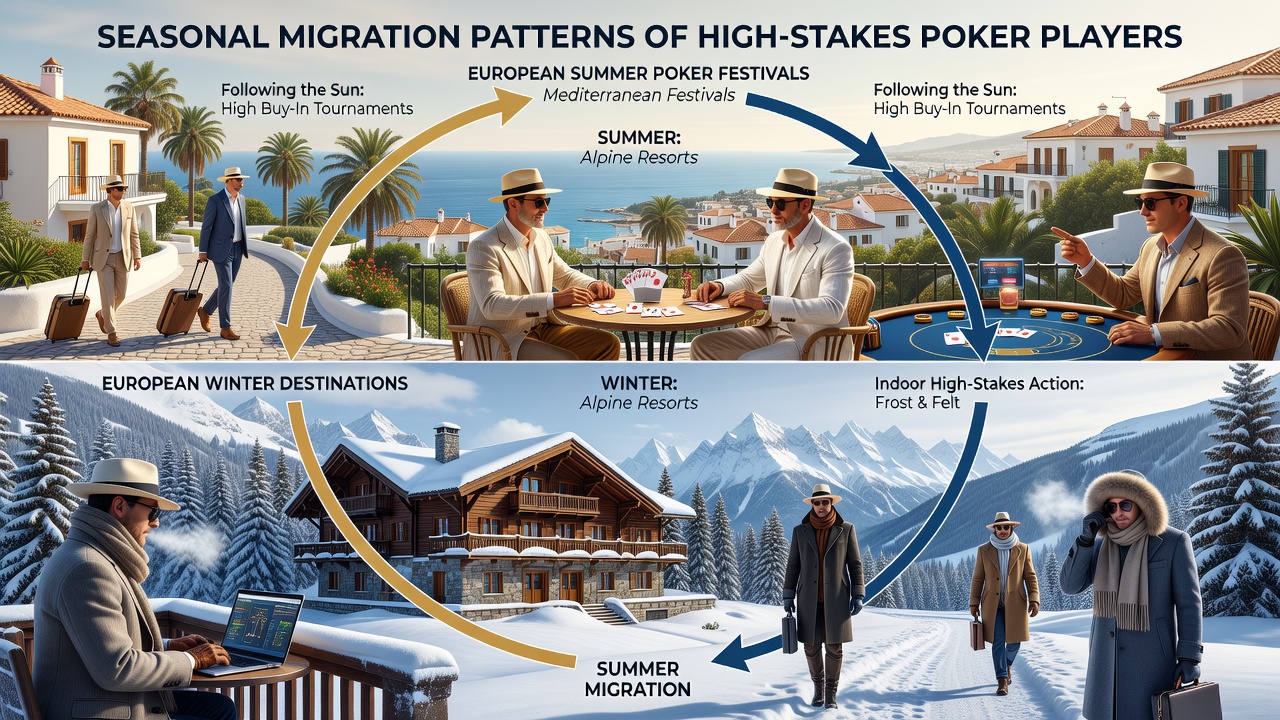
Observers note that several professional players maintain residences or long-term accommodations in both regions, which reduces transition friction and supports repeated annual migrations. Data collected by the International Gaming Institute at the University of Nevada shows these individuals contribute disproportionately to rake generation because they play longer hours and participate in higher-limit games than recreational visitors.
Measured Effects on Regional Rake Structures
Operators respond to volume changes by adjusting promotional rake caps and time-based incentives rather than altering base percentages in most documented cases. European properties frequently introduce reduced-rake promotions during July and August when player counts peak, according to reports from the European Gaming and Betting Association, while Caribbean venues maintain standard rates yet add high-hand bonuses that indirectly increase effective rake through greater participation. Across both regions, total rake collected correlates directly with the number of active tables, and migration-driven fluctuations produce predictable revenue spikes followed by quieter periods that prompt temporary staffing adjustments.
Regional comparisons indicate that rake per table hour at European festival venues averages eighteen percent higher than non-festival baselines, whereas Caribbean winter circuits record a twenty-two percent uplift over their off-season figures. These patterns hold across multiple years of tracked data, and property managers use the information to forecast staffing needs and negotiate supplier contracts for tournament infrastructure.
Conclusion
Seasonal migration between European summer festivals and Caribbean winter circuits creates measurable shifts in player distribution that directly affect rake collection at both sets of venues. Operators track these movements through entry databases and table occupancy metrics, then apply targeted adjustments to promotions and incentives that align with expected volume changes. The resulting revenue patterns remain consistent across recent seasons, and the same cohort of high-stakes participants continues to drive the cycle as new events are added to both calendars.