Regional Variations in Shuffle Tracking Techniques Across European Card Rooms and Their Documented Effects on Session Outcomes
Finley Lorenz · May 22, 2026

Regional Variations in Shuffle Tracking Techniques Across European Card Rooms and Their Documented Effects on Session Outcomes
Shuffle tracking involves players observing and remembering the positions of high-value card clumps as dealers perform shuffles, and this method has taken on distinct forms in card rooms throughout Europe because local rules, table designs, and dealer practices differ by country. Observers note that these adaptations produce measurable shifts in how sessions unfold for those who apply the techniques consistently. Research from academic sources indicates that outcomes vary when players adjust their tracking methods to match the specific shuffle mechanics they encounter in each region.
Core Principles Behind Regional Adaptations
European card rooms employ either manual multi-pass shuffles or continuous shuffling machines, and each approach creates unique opportunities for tracking sequences. In areas where manual shuffles dominate, players often focus on strip and riffle patterns that keep card clusters intact longer, whereas rooms using machines require shorter observation windows and quicker mental mapping of remaining decks. Data from industry reports shows that session win rates can shift by several percentage points depending on which shuffle type a player encounters most frequently during extended play.
Those who've studied the practice across borders report that German and Dutch rooms tend to favor deeper manual procedures with more riffle stages, which allows for extended clump tracking over multiple rounds. By contrast, facilities in Southern Europe often incorporate more frequent machine-assisted shuffles that reset the deck faster and limit the window for sustained tracking. Evidence from regulatory filings reveals that these mechanical differences correlate with altered average session lengths before players achieve positive results or decide to exit.
Documented Patterns in Western and Central Europe
Card rooms in France and Belgium have adopted hybrid shuffle protocols that combine manual cuts with automated verification steps, and players who adjust their tracking accordingly often record steadier results over hundreds of hands. Studies conducted by university researchers found that these protocols reduce the effectiveness of basic clump following while rewarding those who incorporate cut-card placement awareness into their mental models. Figures from gaming oversight agencies indicate that players using region-specific adjustments experience fewer large swings in bankroll compared to those applying uniform methods imported from other jurisdictions.
What's interesting is how table layout influences outcomes further. Narrower felt surfaces common in Central European venues force dealers to execute tighter shuffles, which in turn preserves certain card groupings more reliably than the wider tables found elsewhere. One study revealed that participants who accounted for these spatial factors achieved higher session completion rates before reaching predetermined stop-loss thresholds.
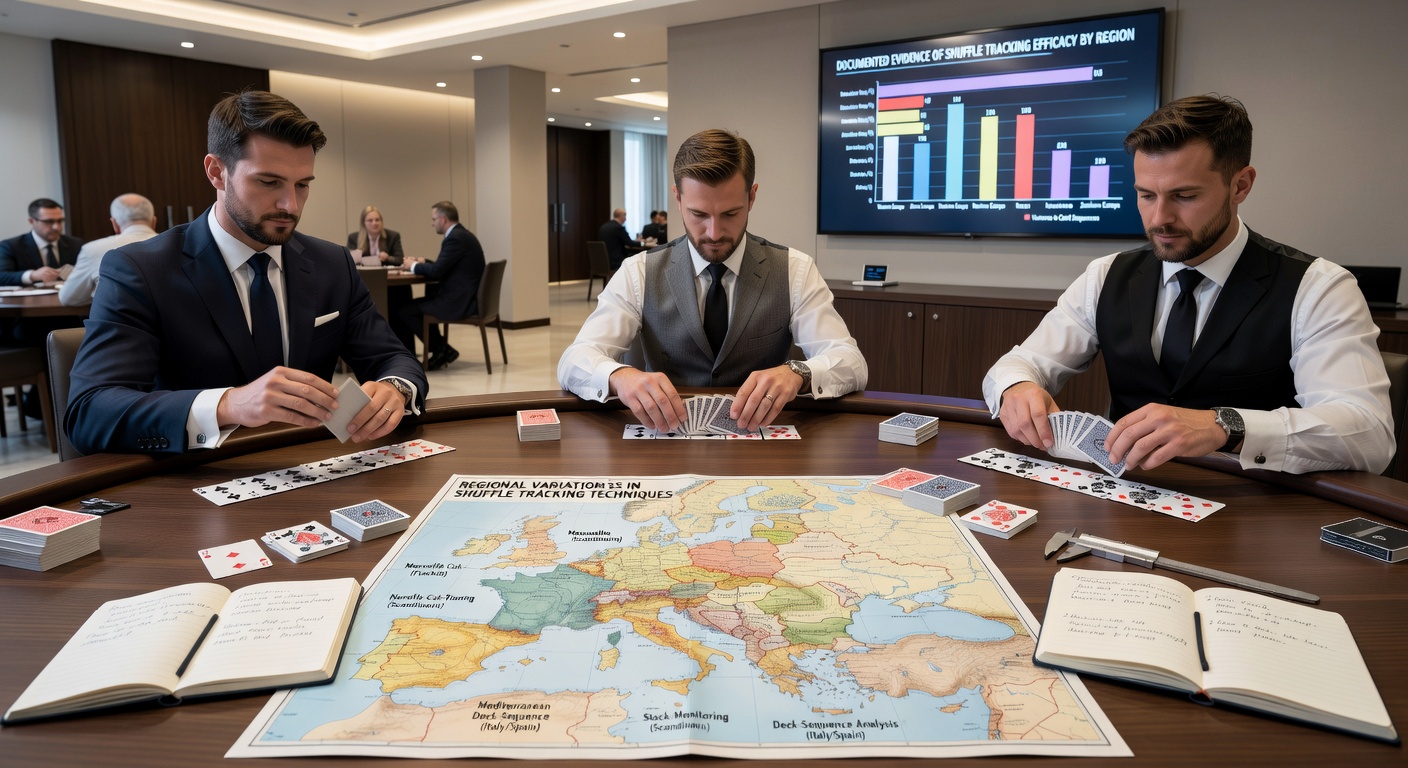
Eastern European Approaches and Recorded Results
Facilities in Poland adn the Czech Republic frequently use fewer decks and quicker shuffle cycles driven by local player volume, and this environment rewards trackers who prioritize early-hand observation rather than long-term clump memory. According to European Gaming and Betting Association research, these faster cycles produce shorter but more frequent positive outcome streaks when players adapt their counting sequences to the accelerated pace. Data collected over multiple venues shows that session profitability tends to stabilize when trackers limit their focus to the first three rounds after each shuffle.
Observers note that regulatory requirements in these regions also affect technique viability. Stricter inspection intervals for shuffle integrity reduce the margin for error in tracking, yet they simultaneously create predictable shuffle rhythms that attentive players can exploit. Reports compiled by independent gaming analysts confirm that such conditions lead to more consistent but smaller per-session gains than those observed in slower-paced Western venues.
Developments Reported Through May 2026
Updated compliance standards rolled out across several European jurisdictions in May 2026 introduced additional verification steps during manual shuffles, and preliminary data from participating card rooms indicates these changes have narrowed the performance gap between different tracking styles. Researchers at various institutions continue to monitor how these adjustments influence overall session statistics, with early figures revealing modest reductions in variance for players who refine their methods to match the new protocols. The Gaming Research Institute of Canada published preliminary comparisons that align with these observations from on-site records.
Conclusion
Regional differences in shuffle mechanics continue to shape how tracking techniques translate into measurable session results across European card rooms. Patterns documented through regulatory data and academic analysis demonstrate that players who tailor their approaches to local conditions encounter distinct outcome distributions compared to those using generalized methods. As standards evolve, ongoing collection of performance metrics will further clarify the precise relationships between technique variations and session longevity.