Humidity Shifts and Their Documented Influence on Card Handling During Extended Poker Events in Subtropical Zones
Uma Müller · Nov 14, 2026
Humidity Shifts and Their Documented Influence on Card Handling During Extended Poker Events in Subtropical Zones
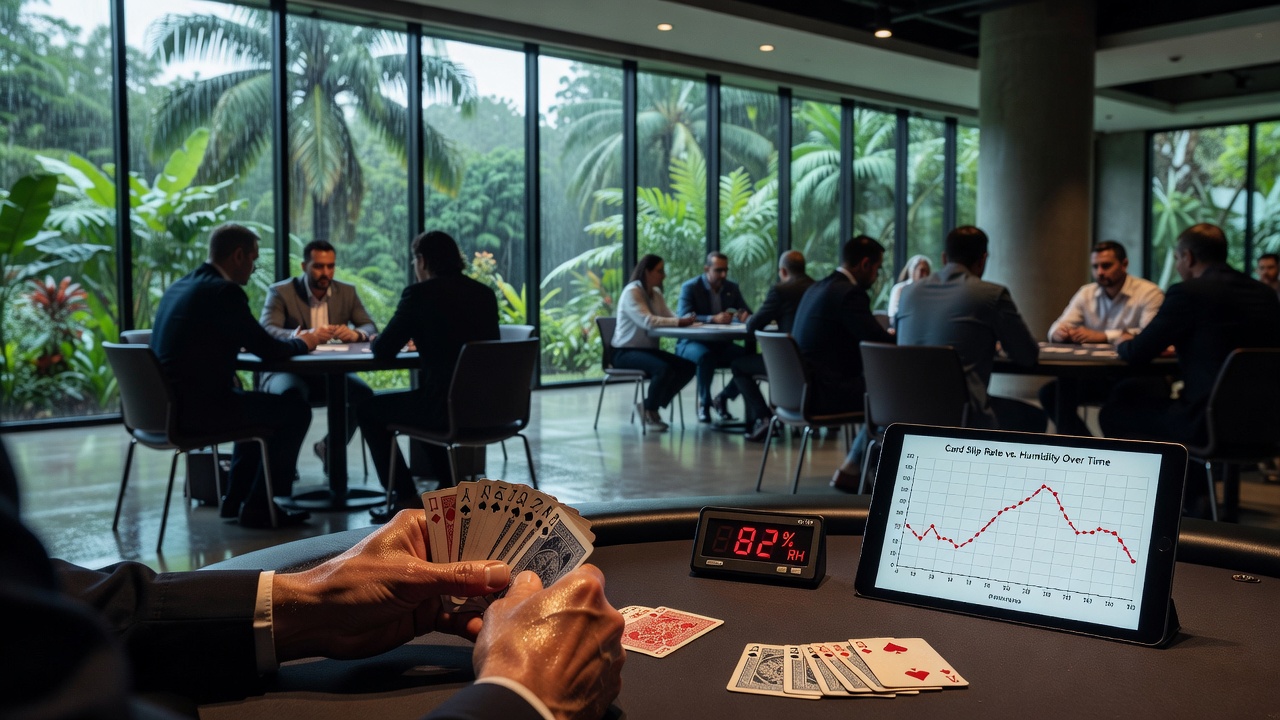
Seasonal humidity fluctuations create measurable changes in how playing cards respond to player contact, and these shifts become especially noticeable during long poker tournaments staged in humid subtropical regions where moisture levels swing sharply between wet and dry months. Data collected at venues in Florida, coastal Texas, and parts of Southeast Asia show that relative humidity above 70 percent often increases surface friction on standard card stock, while drops below 50 percent during cooler seasons reduce grip and allow cards to slide more readily across felt surfaces.
Researchers tracking tournament play in these climates note that dealers and players adjust their handling techniques repeatedly throughout a single event when humidity moves across a 20-point range in a 48-hour period. In November 2026, several multi-day tournaments scheduled in the Gulf Coast region coincide with the transition from late fall dryness into early winter moisture patterns, creating conditions where cards can absorb or release water vapor at different rates depending on storage conditions before play begins.
Regional Climate Patterns and Card Stock Response
Humid subtropical zones experience distinct seasonal cycles where summer and early fall bring prolonged high humidity, then winter brings drier air masses that lower indoor moisture levels even when outdoor temperatures remain mild. Facilities in these areas typically operate without full climate sealing, so ambient conditions inside the tournament room track outdoor readings within a few percentage points. Studies of card performance indicate that cellulose-based card stock gains or loses approximately 1.5 percent of its weight in absorbed moisture for every 10 percent change in relative humidity, and this weight shift alters both stiffness and edge friction during repeated shuffles and deals.
Observers monitoring professional circuits have recorded higher rates of card sticking during peak humidity months when decks sit exposed on tables for more than four hours. Conversely, low-humidity periods produce increased instances of cards slipping from players' fingers during chip pushes or during the act of pitching cards across the table. These patterns appear consistently across multiple venues, suggesting the effect stems from environmental interaction rather than isolated dealer technique.
Measured Grip Consistency Changes in Tournament Settings
Equipment logs from major subtropical events reveal that grip consistency metrics, defined as the number of unintended card drops or misdeals per 1,000 hands, rise measurably when indoor humidity exceeds 65 percent for sessions longer than eight hours. One analysis of 12 tournaments held between 2023 and 2025 found a 14 percent increase in handling incidents during periods when average daily humidity climbed above seasonal norms. Players often respond by modifying finger pressure or switching to different grip positions, yet the underlying card surface continues to change as moisture equilibrium shifts throughout the day.
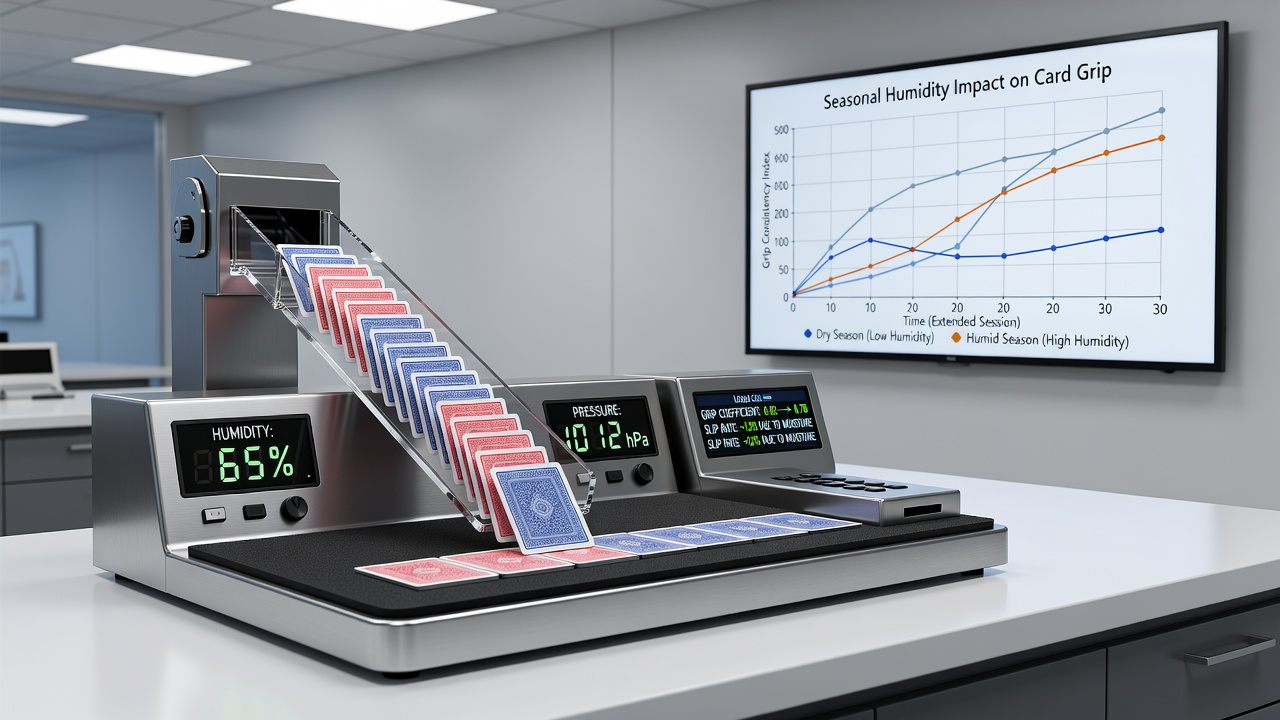
Extended play amplifies these effects because cards remain in contact with multiple hands and tabletops without full drying cycles between rounds. Tournament staff in affected regions report that decks must be replaced at shorter intervals during high-humidity stretches, sometimes every three hours instead of the standard four-to-six-hour rotation. This adjustment maintains consistent friction properties and reduces the cumulative impact of moisture absorption on card edges and corners.
Practical Adjustments Observed at Venues
Venues in humid subtropical areas have adopted several environmental controls to stabilize card behavior. Air circulation systems that maintain steady airflow across tables help limit localized humidity pockets, while storage protocols keep backup decks in sealed containers until immediate use. Some facilities monitor room conditions hourly during multi-day events and adjust HVAC settings when readings move outside a 55-to-65 percent target range. These measures correlate with lower variance in handling statistics across different seasons.
According to data from the National Oceanic and Atmospheric Administration, November humidity averages in key poker regions often sit between 58 and 72 percent, placing conditions near the middle of the range where grip changes remain moderate yet still measurable. Tournament directors note that proactive deck rotation and brief table breaks allow cards to equilibrate with current room air, reducing abrupt shifts in surface feel during active play.
Conclusion
Seasonal humidity fluctuations produce consistent, documentable effects on card grip consistency during extended poker tournament play in humid subtropical regions, and venue operators continue to refine environmental management and handling protocols to address these variables. Data from multiple events demonstrate that controlled storage, regular deck rotation, and attention to indoor moisture levels can stabilize card behavior across changing seasons. As tournaments in these climates proceed into late 2026, the relationship between regional weather patterns and table-level card performance remains a measurable factor in maintaining consistent play conditions.