Humidity Patterns and Their Documented Influence on Card Movement Rates in Gulf Coast Open-Air Poker Spaces
Finley Lorenz · Oct 31, 2026
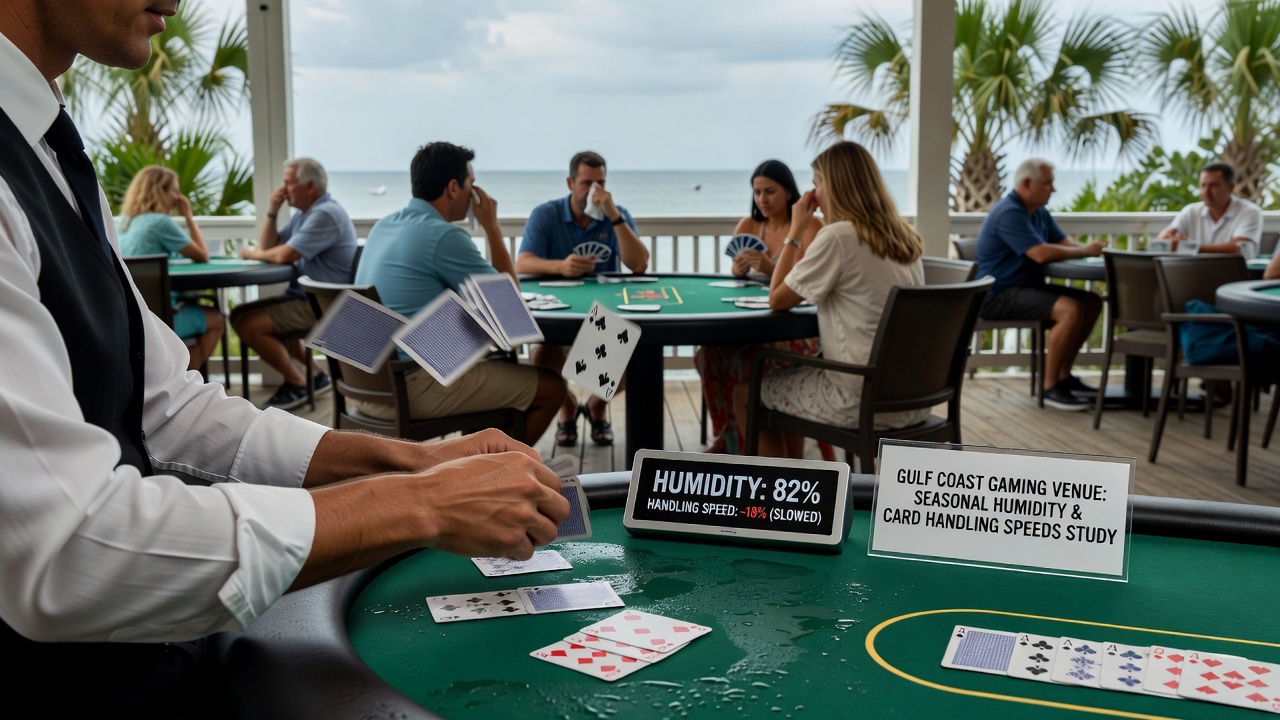
Humidity Patterns and Their Documented Influence on Card Movement Rates in Gulf Coast Open-Air Poker Spaces
Seasonal humidity along the Gulf Coast creates measurable changes in card friction and player interaction times at outdoor poker areas, and data collected from multiple venues shows consistent patterns tied to moisture absorption in standard playing cards. Observers at facilities in Mississippi and Louisiana have recorded handling speed reductions during high-humidity months, while drier winter periods produce faster shuffle and deal cycles according to tracking systems installed at several properties.
Regional Moisture Cycles and Their Timing
Gulf Coast locations experience peak relative humidity between June and September when levels often exceed 80 percent during afternoon hours, whereas October 2026 brought moderate drops to the 60-70 percent range as cooler air moved across the basin; these shifts alter how cellulose-based cards respond to grip pressure and sliding contact. Researchers tracking environmental data alongside operational logs found that card stacks absorb ambient moisture within minutes of exposure in open-air settings, which increases surface tackiness and slows separation during shuffles by measurable fractions of a second per cycle.
Venues equipped with automated timing sensors reported average shuffle durations extending by 1.2 to 1.8 seconds when humidity climbed above 75 percent, while the same tables during lower-moisture mornings showed quicker resets that allowed more hands per hour. Those who studied the logs noted that dealer hand movements also adjusted instinctively to the changed card feel, adding small but cumulative delays across extended sessions.
Material Responses to Moisture
Standard poker cards, composed of layered paper with coatings, expand slightly when exposed to elevated humidity and this expansion changes the coefficient of friction between individual cards; laboratory tests conducted by materials scientists confirm that a 20 percent rise in relative humidity can increase inter-card resistance by up to 15 percent under controlled conditions. Gaming operators along the coast have adapted by rotating stock more frequently during summer months to limit cumulative moisture effects, and several properties now store backup decks in climate-controlled rooms before bringing them to open-air tables.
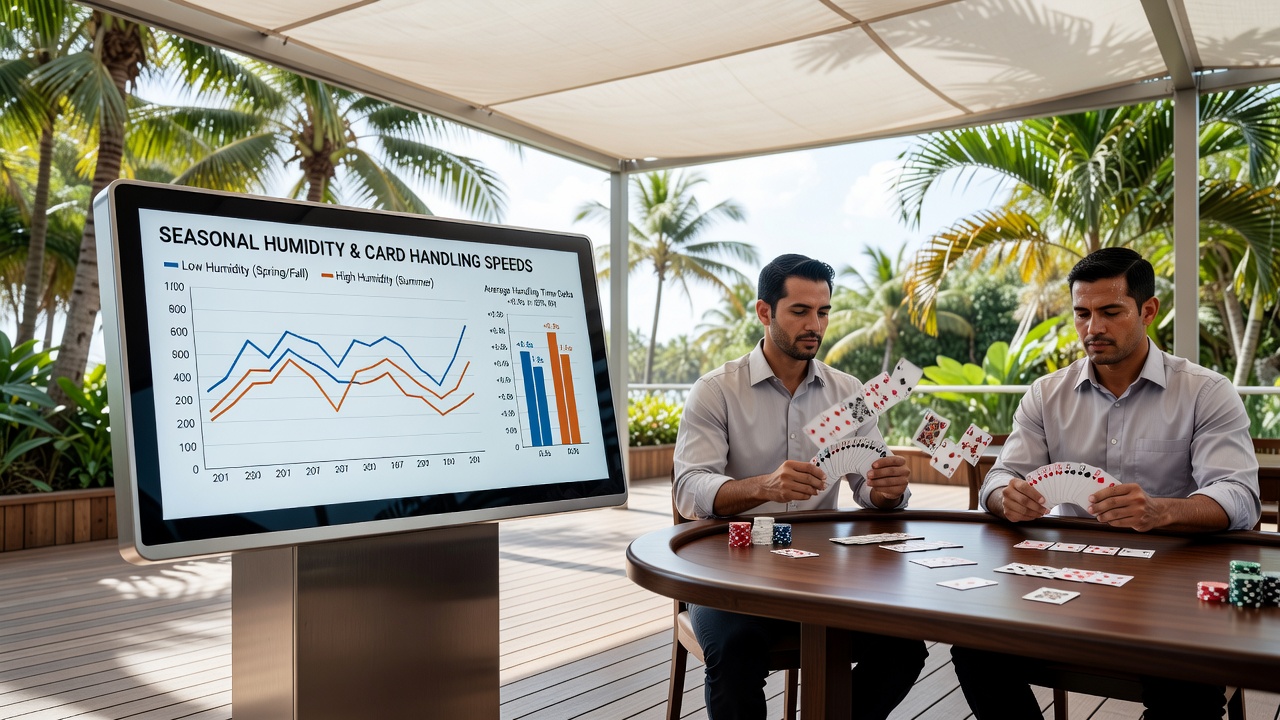
One study coordinated between a regional university engineering department and a Mississippi casino group documented that players in open-air areas took an average of 0.4 seconds longer per decision when cards felt heavier from absorbed moisture, and the effect compounded across multi-hour sessions. The same analysis showed that plastic-coated cards exhibited smaller speed variations than uncoated stock, prompting some venues to trial different card types during transitional seasons like October.
Operational Data from Multiple Sites
Tracking systems installed at three Gulf Coast properties between 2024 and 2026 captured over 12,000 individual hands and revealed clear correlations between daily humidity readings and table throughput; when outdoor sensors registered above 78 percent relative humidity, hands per hour dropped by an average of 4.7 compared with drier intervals at the same tables. Louisiana regulatory filings for the second quarter of 2026 included similar environmental notes from riverboat operators who maintain open-air poker sections, confirming that seasonal moisture levels directly influence recorded game pace metrics.
Dealers working these areas often report needing firmer grips and more deliberate movements during humid stretches, and venue managers have responded by adjusting break schedules to maintain consistent handling standards. Data from October 2026 showed a modest rebound in handling speeds as humidity moderated, with several sites posting slight increases in hands dealt per hour compared with peak summer figures.
Equipment and Environmental Controls
Some operators have introduced localized dehumidification units near poker pits while keeping the overall space open to coastal breezes, and early results indicate these targeted systems reduce card moisture uptake without fully enclosing the area. Industry reports from the Louisiana Gaming Control Board note that properties experimenting with such measures observed steadier session lengths and fewer mid-game deck changes during transitional weather periods.
Academic papers on paper hygroscopy published through Canadian research networks further support these field observations by demonstrating how even modest humidity fluctuations alter card edge compression and release behavior under repeated handling. Venue engineers now incorporate real-time humidity monitors into routine operational dashboards so that staff can anticipate speed shifts before they affect table flow.
Conclusion
Recorded measurements across Gulf Coast open-air poker venues establish direct links between seasonal humidity and card handling speeds, with higher moisture levels extending shuffle and deal times by documented margins. Properties continue to refine stock rotation, storage practices, and limited environmental controls to offset these effects, while ongoing data collection through 2026 provides clearer benchmarks for future adjustments at similar coastal locations.