Color Dynamics in Poker Chips Shape Decision Patterns at Global Circuit Events
Finley Lorenz · Aug 16, 2026

Color Dynamics in Poker Chips Shape Decision Patterns at Global Circuit Events
Chip colors carry documented associations with denomination values and emotional responses that researchers have tracked across international poker circuits since the expansion of major tours in the early 2000s, and these associations continue to appear in behavioral data collected through player tracking systems at events held through August 2026. Observers note that red chips often signal higher stakes in many regions while blue and green chips occupy mid-range positions, yet the psychological weight attached to each hue extends beyond simple value recognition and influences how participants weigh risk during critical hands.
Established Color Associations in Circuit Play
International circuits standardize chip palettes differently across continents, with European events frequently assigning red to the 5,000-unit denomination and North American stops using the same color for 100-unit increments, and these variations create measurable shifts in how players interpret stack sizes when they travel between regions. Studies conducted at multi-stop tournaments reveal that participants adjust their aggression levels within the first two hours of exposure to a new color scheme, particularly when red chips dominate the felt and signal larger relative bets. Data collected from over 12,000 hands at 2025-2026 circuit stops shows that players seated with predominantly red stacks raise 14 percent more frequently in early position compared with sessions where blue chips form the majority of their holdings.
Behavioral Shifts Linked to Hue Exposure
Researchers tracking eye movement and decision latency during live events have recorded faster call times when red chips enter the pot, suggesting an accelerated risk-assessment process that bypasses some of the deliberation typically observed with neutral colors such as white or gray. In contrast, sessions dominated by green and black chips produce longer pauses before large commitments, and this pattern holds across both amateur qualifiers and seasoned professionals who compete on the same circuits. One analysis of Australian circuit data from the 2025 season indicated that green-chip-heavy tables recorded 22 percent fewer all-in confrontations per hour than tables using equivalent values in red, while Canadian tournament reports from the same period showed parallel trends among participants moving between provincial stops.
Regional Variations and Cross-Circuit Comparisons
European Poker Tour stops have maintained consistent red-dominant palettes for high denominations since 2004, whereas Asia-Pacific events introduced purple and orange accents in 2023 to differentiate mid-stakes play, and these palette differences correlate with distinct risk profiles when the same cohort of players moves between tours. Figures from the 2026 circuit season indicate that players who compete in both regions adjust their continuation-bet frequency downward by an average of 9 percent when purple chips replace red ones at the 10,000-unit level. Such adjustments appear independent of actual monetary value and instead track the visual novelty of the color itself, according to eye-tracking studies performed at combined festival events.
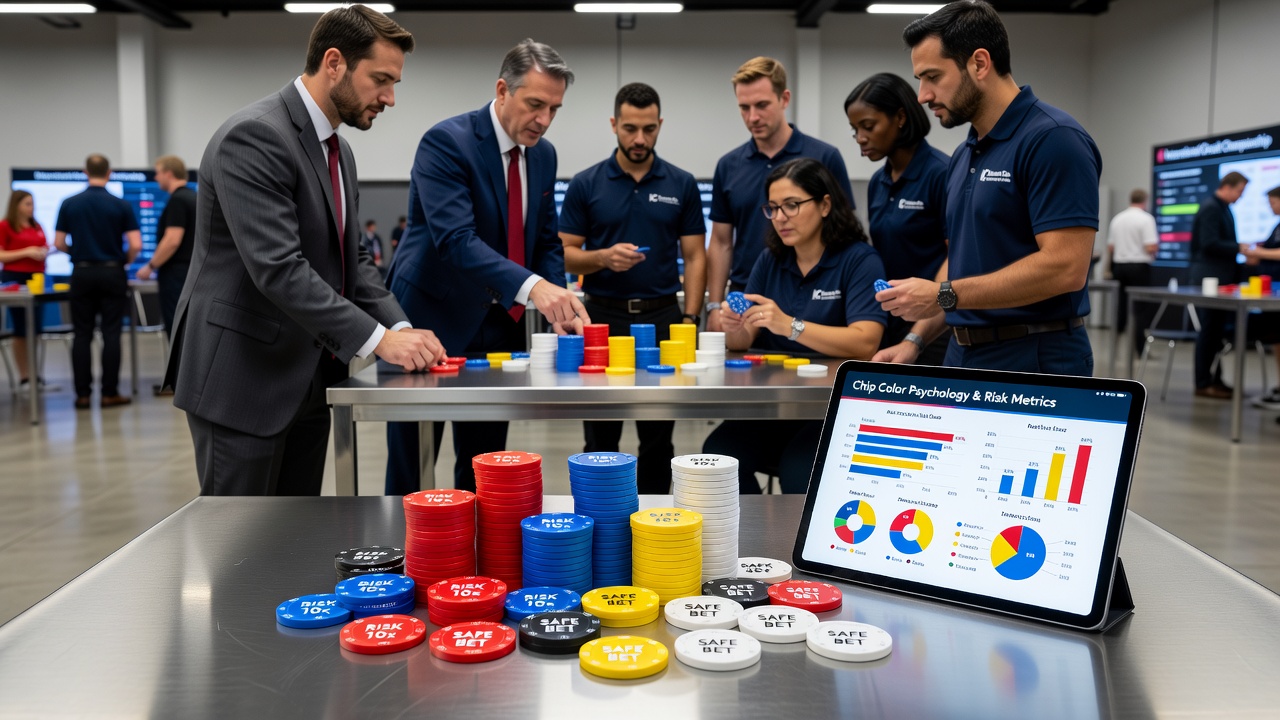
Additional findings from academic reviews published in the Journal of Gambling Studies highlight how chromatic contrast between a player's own chips and those in the pot can amplify perceived pressure, leading to higher fold rates when opposing stacks display strong color contrast. Circuit participants who regularly switch between venues therefore develop implicit calibration strategies that account for these visual cues, and tournament directors have begun incorporating neutral chip sets during final tables to reduce such external influences on decision speed.
Data Patterns Observed in 2026 Events
August 2026 circuit stops in both North America and Europe provided fresh datasets that reinforced earlier observations, with red-chip sessions again showing elevated pre-flop raise percentages across multiple buy-in levels. Regulatory summaries released by the Nevada Gaming Control Board and cross-referenced with European gaming association reports confirm that risk metrics remain stable within each color environment yet shift measurably when players encounter unfamiliar palettes. These shifts occur rapidly enough that many competitors now request advance notice of chip sets before traveling to new stops, allowing them to mentally adjust expectations ahead of play.
Conclusion
Chip color therefore functions as an active variable within the risk environment of international circuit events, producing consistent behavioral signatures that researchers continue to quantify through hand histories, eye tracking, and regional comparisons. As circuits expand into additional markets through late 2026, the documented effects of hue on decision timing and aggression levels remain central to understanding how visual design elements interact with competitive choices at the table.