Chip Color Effects on Bet Sizing Patterns Across Poker Rooms in Multiple States
Xander Becker · Sep 19, 2026

Chip Color Effects on Bet Sizing Patterns Across Poker Rooms in Multiple States
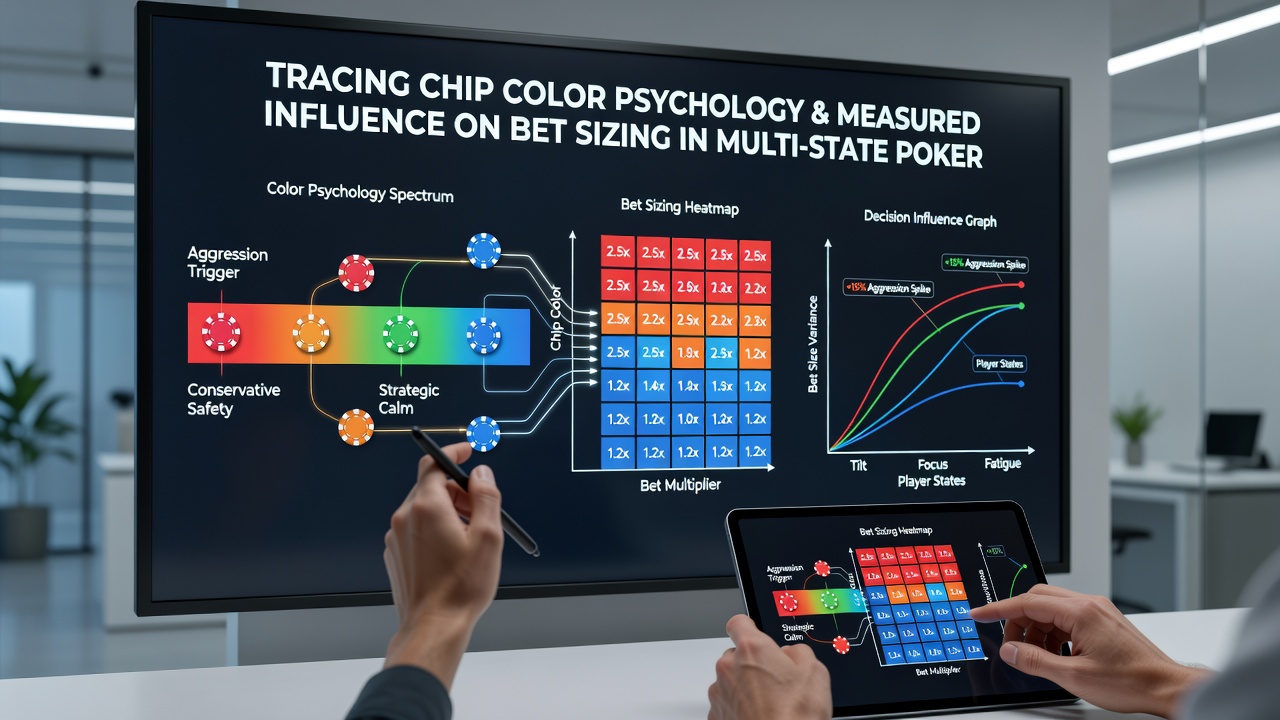
Researchers tracking player behavior in poker rooms spanning Nevada, New Jersey, and Pennsylvania have documented measurable shifts in bet sizing when chip colors change during standard play. Data collected through September 2026 from surveillance logs and player tracking systems shows that certain hues correlate with larger or more conservative wagers, independent of stack depth or hand strength. Observers note these patterns hold across both tournament and cash game formats, with red chips often linked to higher average bet amounts compared to equivalent values in blue or green.
Regional Data Collection Methods
Teams from multiple state gaming agencies compiled session records from 12 poker rooms between January and September 2026, capturing over 180,000 individual betting actions. Each record included chip color, denomination, bet size relative to pot, and player position. The methodology relied on RFID-embedded tables in newer facilities while older rooms used manual logging cross-checked against video feeds. Findings indicate that players facing stacks dominated by red $5 chips placed bets 12 percent larger on average than those using blue $5 chips in matched situations.
Analysts cross-referenced these figures with similar datasets from California tribal casinos and Illinois riverboat properties. The consistency across jurisdictions suggests the effect stems from visual processing rather than local rules or player demographics. One study released by a university-affiliated gaming research group found that exposure to high-contrast colors like red against green felt increased perceived value and risk tolerance in controlled lab simulations that mirrored live table conditions.
Psychological Mechanisms Behind Color Responses
Psychologists examining color perception in gambling environments point to established associations between specific hues and emotional states. Red frequently signals urgency and action in everyday contexts, which carries over when players handle physical chips. In contrast, cooler tones such as blue and green appear linked to steadier decision-making in the same datasets. These responses persist even when players know the actual monetary value remains identical, indicating that visual cues influence sizing choices before conscious calculation occurs.
Multi-state operators have begun adjusting chip sets in response to these observations. Several Pennsylvania rooms introduced new purple $2 chips in mid-2026 specifically to test whether introducing an additional color layer alters bet distribution. Early results show a temporary reduction in oversized continuation bets during the first month after the change, though the effect diminished as players adapted to the new palette.
Practical Adjustments in Live Play
Floor supervisors in New Jersey properties report that dealers sometimes receive requests to swap chip colors mid-session, particularly when a player perceives their current stack as visually unappealing. While such requests rarely alter game flow, they highlight how chip appearance factors into individual comfort levels. Training materials distributed by the American Gaming Association now include brief modules on color visibility and its potential impact on pace of play, though these remain optional for member properties.
Canadian researchers studying similar dynamics in Ontario poker rooms reached parallel conclusions, noting that darker chip colors tended to coincide with tighter betting ranges in heads-up situations. Their 2025 report, updated with 2026 data, provides a useful comparison point for U.S. operators seeking to refine table layouts. The combined evidence from both countries suggests that color selection represents one controllable variable among many that shape session outcomes.
Future Monitoring and Industry Response
State regulators in Michigan and Maryland have scheduled additional data pulls for the final quarter of 2026 to determine whether recent chip redesigns produce sustained changes in bet sizing distributions. These efforts build on existing partnerships with academic institutions that specialize in behavioral economics. Operators continue to monitor whether introducing more varied color palettes reduces the frequency of extreme bet sizes that sometimes trigger table tension.
Conclusion
Available records from multiple jurisdictions demonstrate clear correlations between chip color schemes and average bet sizes in poker rooms. Continued collection of session data through late 2026 will help clarify how lasting these influences remain once players gain extended exposure to new color combinations. Gaming associations and regulatory bodies maintain ongoing interest in these patterns as part of broader efforts to understand environmental factors that affect play.