Hard Rock International Sells Stake in Meadowlands Casino Project to Jeff Gural, Ending Decade-Long Partnership
Finley Lorenz · Apr 17, 2026
Hard Rock International Sells Stake in Meadowlands Casino Project to Jeff Gural, Ending Decade-Long Partnership
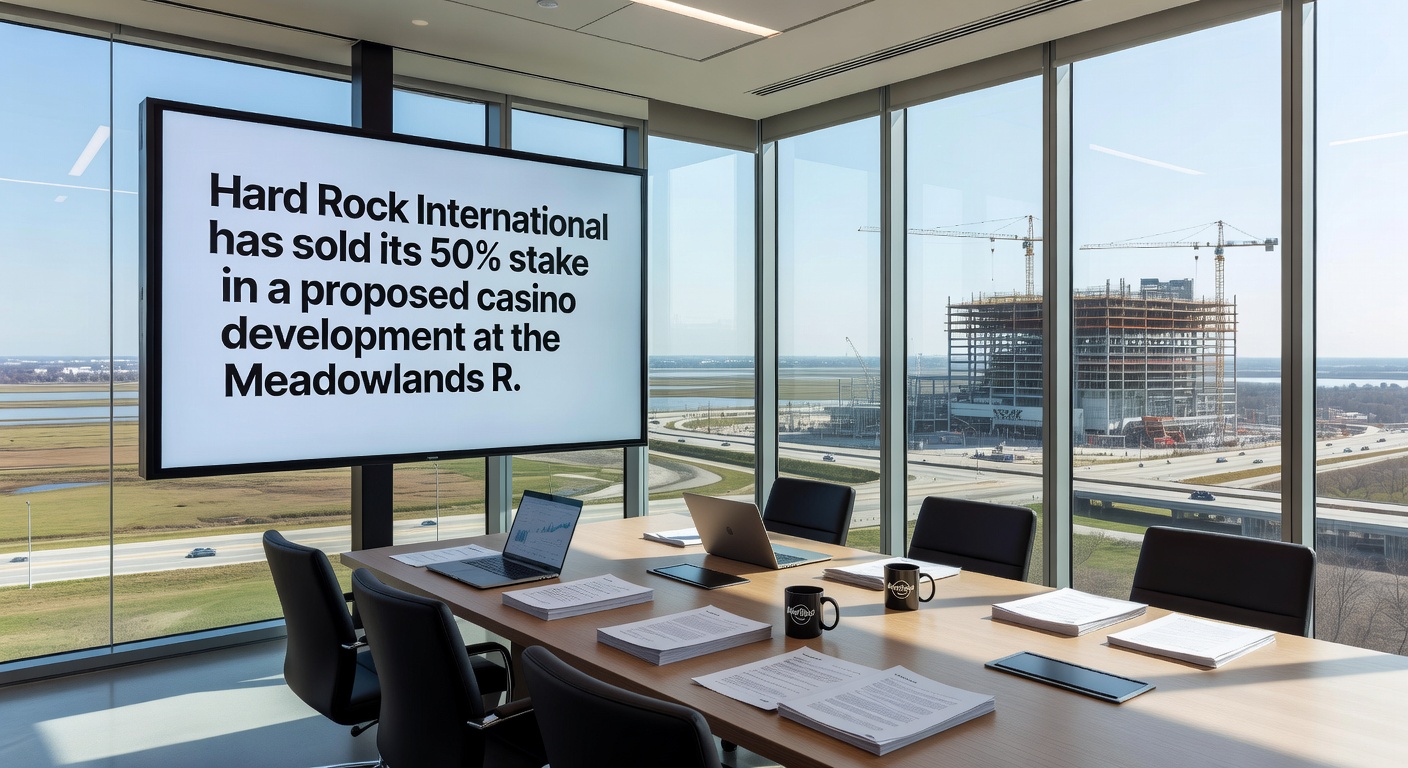
News broke on April 17, 2026, that Hard Rock International quietly sold its 50% stake in a long-proposed casino development at the Meadowlands Racetrack in North Jersey to the track's owner, Jeff Gural's New Meadowlands Racing; the transaction, which wrapped up about two weeks earlier, effectively dissolves a partnership that first took shape back in 2015, when both parties eyed the site as prime real estate for gaming expansion beyond Atlantic City.
The Roots of the Meadowlands Partnership
Back in 2015, Hard Rock International, known for its global chain of hotels and casinos, teamed up with Jeff Gural, a real estate developer and longtime horse racing enthusiast who controls New Meadowlands Racing; together they envisioned transforming part of the 149-acre Meadowlands Racetrack complex in East Rutherford, New Jersey—already a hub for harness racing and sports betting—into a full-fledged casino resort that could draw crowds from the New York City metro area, while bolstering the track's fortunes amid declining racing attendance.
That collaboration came at a time when North Jersey leaders, including those in the Meadowlands region, pushed hard for casino legalization outside Atlantic City; proponents argued such moves would generate jobs, tax revenue, and competition to revitalize the gaming industry, yet voters statewide rejected a 2016 ballot question that would have greenlit two casinos in the north, leaving projects like the Meadowlands proposal in legislative limbo for years.
Despite setbacks, Hard Rock and Gural pressed on; they refined plans for a $1 billion-plus development featuring slots, table games, a Hard Rock-branded hotel, and entertainment venues, positioning it as a complement to the existing FanDuel Sportsbook at the track, which Gural helped pioneer as one of the nation's first legal sportsbooks after the 2018 U.S. Supreme Court decision.
Observers note how Gural, through entities like his Big M Inc., has invested heavily in the Meadowlands since acquiring control in 2010; he modernized facilities, introduced simulcasting, and navigated the shift toward sports wagering, but casino advocates say a full resort remains key to long-term viability, especially as neighboring states like New York and Pennsylvania expand their gaming footprints.
Details of the Stake Sale and Partnership Dissolution
The sale terms remain under wraps—no public figures on the purchase price have surfaced yet—but sources confirm Hard Rock transferred its entire 50% interest in the joint venture to New Meadowlands Racing around early April 2026, just before the story hit outlets like Casino.org; this move clears the deck for Gural to control the project's future unilaterally, free from shared decision-making that sometimes slowed progress amid regulatory hurdles and shifting political winds.
Hard Rock's departure caps a decade of joint efforts marked by optimism, detailed proposals submitted to state lawmakers, and public hearings where backers highlighted potential economic boosts—up to 3,000 jobs and hundreds of millions in annual taxes, according to estimates from project filings—yet the partnership weathered opposition from Atlantic City operators fearful of market cannibalization.
What's interesting here is the timing; with New Jersey's gaming landscape evolving rapidly post-2021 sports betting boom and online casino legalization, Hard Rock's exit aligns with broader industry consolidation, where operators prune non-core assets to chase higher-upside opportunities elsewhere.
Gural's Confidence and the Atlantic City Hurdle
Jeff Gural wasted no time signaling his intent to revive the casino push; in statements following the news, he expressed strong belief in securing approvals provided he can mitigate concerns from Atlantic City casino owners, who have long lobbied against North Jersey expansion to protect their monopoly on bricks-and-mortar gaming outside the shore.
Those who've tracked New Jersey gaming policy know the drill—bills to authorize Meadowlands and Hudson County casinos have advanced in the legislature multiple times, only to stall over revenue-sharing mandates designed to aid Atlantic City; recent data from the New Jersey Division of Gaming Enforcement shows Atlantic City's nine casinos generated $5.8 billion in gross gaming revenue in 2025, up slightly year-over-year, but operators still cite saturation risks from northern competition.
Gural's strategy likely involves crafting compromises, such as enhanced subsidies for AC or phased rollouts; he told reporters the track's existing infrastructure—including 4,500 parking spots and proximity to MetLife Stadium—makes it shovel-ready, and with sports betting now a $14 billion annual industry in the state (per 2025 DGE reports), a casino could integrate seamlessly to capture crossover players.
Take one case from 2023, when Gural partnered briefly with Bally's on a similar Hudson Yards proposal, only for that to fizzle; experts observe such persistence defines his approach, and now with full ownership, the ball's squarely in his court to rally legislators during the 2026 session.
Hard Rock's Strategic Pivot to Brighter Horizons
For Hard Rock International, the sale frees up bandwidth to prioritize ventures with clearer paths forward; chief among them stands a recently approved casino project in New York City alongside billionaire Steve Cohen, owner of the New York Mets, where regulators greenlit plans for a resort at Citi Field's parking lots—a move that positions Hard Rock in the massive NYC market without the North Jersey political thicket.
The company, a subsidiary of the Seminole Tribe of Florida, has built a reputation for flashy, music-themed properties worldwide; in the U.S., successes like its Atlantic City hard Rock Hotel & Casino (relaunched in 2018) underscore its operational prowess, yet analysts point out how divestitures like this streamline portfolios amid a crowded domestic landscape.
Turns out, Hard Rock's Meadowlands stake had languished without legalization, tying up capital since 2015; by offloading it, the operator unlocks funds for expansions in states like Florida (where Seminole compacts fuel growth) and international spots, while maintaining a toehold in New Jersey through digital partnerships.
People familiar with Hard Rock's playbook highlight its agility—much like how it navigated COVID shutdowns by pivoting to online gaming tie-ins—suggesting this isn't a retreat but a recalibration toward projects where approvals loom larger.
Broader Context in New Jersey's Gaming Evolution
This development unfolds against a backdrop of transformation for Garden State gaming; since PASPA's repeal, sportsbooks have proliferated at 17 land-based sites including the Meadowlands, generating over $2 billion in taxes since inception, while iGaming revenue hit $1.6 billion in 2025 alone, per state figures.
Yet land-based casino expansion remains contentious; North Jersey proponents, including unions and local officials, tout job creation—figures from the American Gaming Association indicate regional casinos could add 5,000 positions statewide—while Atlantic City stakeholders demand safeguards, creating a delicate balance Gural must now navigate solo.
It's noteworthy that similar projects, like Resorts World in Hudson County, have resurfaced in bills; observers expect Gural to leverage his track record—having hosted high-profile events like the 2025 Hambletonian—with Hard Rock's exit removing a potential sticking point if the Seminoles pursued competing Florida interests.
And so the Meadowlands saga continues, with Gural at the helm; short-term, the track chugs along with racing meets and betting windows, but long-term eyes turn to Trenton for the next legislative chapter.
Conclusion
Hard Rock International's sale of its Meadowlands stake to Jeff Gural marks the end of a 11-year partnership fraught with promise and pitfalls; executed quietly in early April 2026, the deal empowers Gural to chase casino approval anew—contingent on easing Atlantic City fears—while allowing Hard Rock to double down on wins like its New York City venture with Steve Cohen.
Data underscores the stakes: New Jersey's gaming sector, valued at $7 billion-plus annually, hungers for northern growth to match population centers, yet political realities demand consensus; those who've followed this beat anticipate Gural's full control accelerates momentum, potentially ushering in a new era for the Meadowlands as more than just a racing venue.
In the end, this shift reshapes one high-profile proposal, but it spotlights enduring tensions in U.S. gaming—expansion versus protectionism—and sets the stage for what's next in North Jersey's bid to join the casino map.